Sam Otto · 2 October 2026
Waldora's Rural Outposts Test Pilot Program Pairs Solar Kits With Mobile Health Services
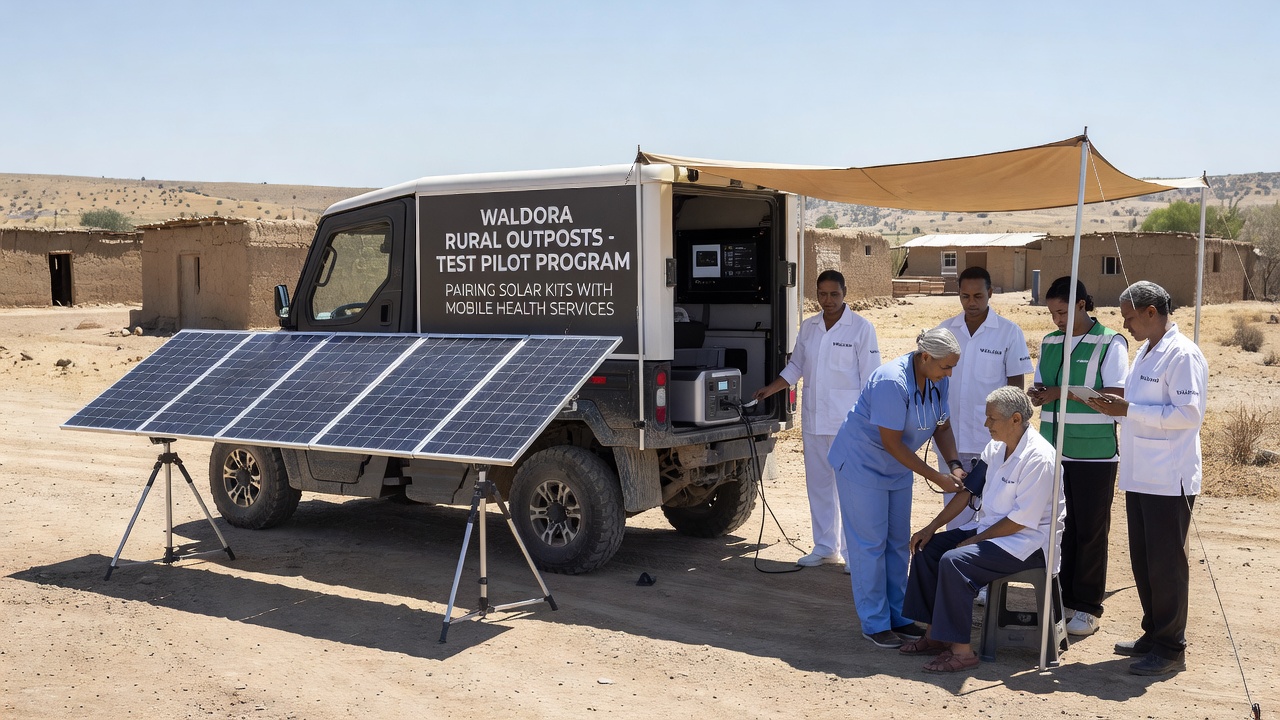
Waldora initiated its Rural Outposts Test Pilot Program in early 2025 to combine compact solar kits with mobile health services across remote settlements, and the effort has expanded steadily through October 2026 with measurable deployments in three districts. Local authorities coordinated with regional energy cooperatives to install photovoltaic arrays rated at 2.5 kilowatts per unit, each paired with battery storage systems that maintain clinic operations for up to 72 hours without sunlight. Mobile health teams equipped with these kits deliver vaccinations, maternal care consultations, and basic diagnostic screenings to populations previously limited by unreliable grid access.
Data from the program's first full year shows 14 outposts now receive weekly visits, while solar output averages 18 kilowatt-hours daily per site according to monitoring logs submitted to the Waldora Energy Directorate. Health service records indicate over 4,200 patient encounters logged between January and September 2026, with follow-up rates improving by 27 percent compared to pre-pilot baselines tracked by district health offices.
Program Design and Infrastructure Setup
Engineers selected modular solar kits designed for transport on standard utility vehicles, allowing teams to reposition units seasonally as community needs shift. Each kit includes panels, inverters, and lithium-ion batteries housed in weatherproof enclosures rated for temperatures ranging from minus 15 to 45 degrees Celsius. Integration with mobile clinics occurs through dedicated charging ports that power ultrasound devices, vaccine refrigerators, and telemedicine laptops without requiring separate generators.
Coordination meetings held quarterly since launch brought together representatives from the Waldora Health Ministry, local agricultural cooperatives, and technical consultants from the European Commission's renewable energy unit. Protocols established during these sessions specify maintenance schedules every 90 days along with remote monitoring via satellite-linked sensors that flag performance drops exceeding 10 percent of expected yield.
Service Delivery and Community Reach
Mobile health teams operate on rotating schedules that cover distances averaging 85 kilometers between outposts, and solar power enables extended hours for evening consultations during harvest seasons when residents return late from fields. Training modules developed by the Waldora Vocational Institute prepare local technicians to handle routine panel cleaning and battery diagnostics, reducing response times for minor faults to under four hours in most cases.
Figures released by the Waldora Statistical Office in October 2026 list 62 trained community health workers currently assigned to the pilot, each carrying portable kits that connect to the main solar arrays upon arrival. Vaccination coverage in participating settlements rose from 68 percent in 2024 to 81 percent by mid-2026, while maternal health visit completion rates increased from 54 percent to 73 percent over the same interval.
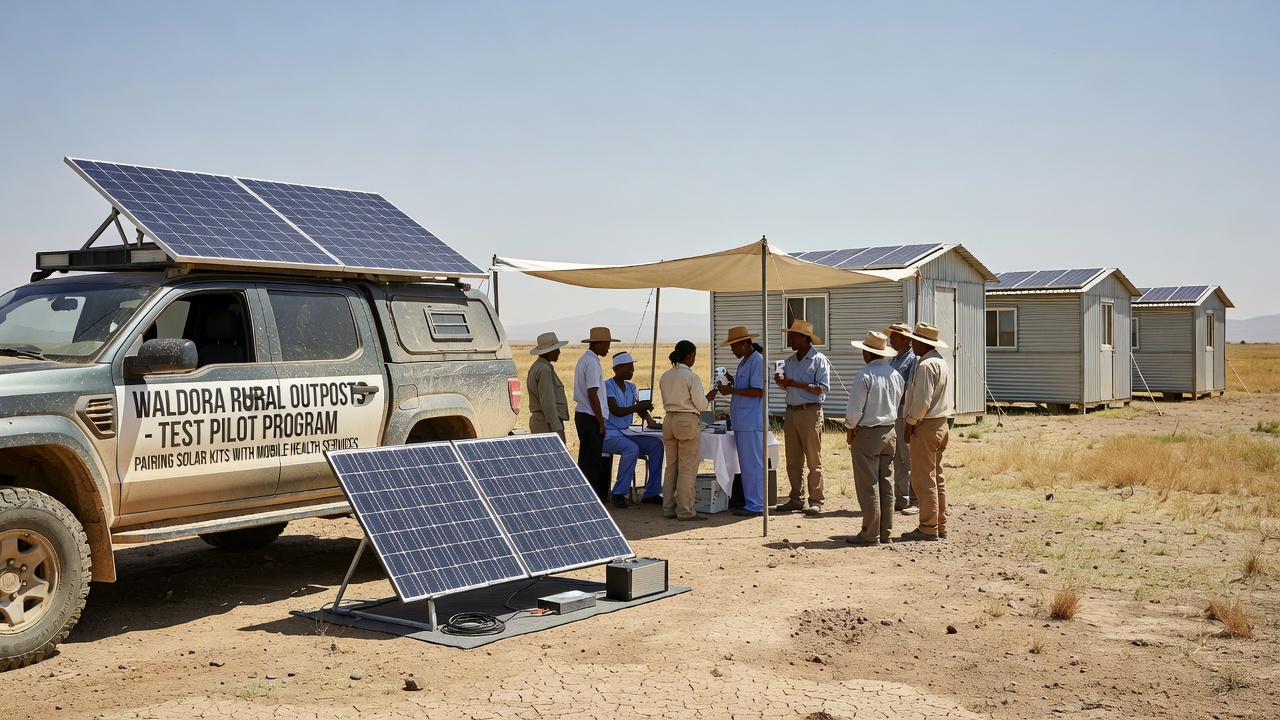
Observers note that weather data collected alongside energy production helps refine deployment calendars, particularly during the rainy period from May through July when cloud cover reduces daily output by an average of 35 percent. Backup protocols route excess power from higher-yield sites to nearby outposts via portable transfer cables when deficits occur.
Monitoring Results Through October 2026
Performance reports compiled by the pilot oversight committee detail uptime rates above 94 percent for clinic equipment across all 14 sites, with solar kits contributing directly to uninterrupted cold-chain storage for temperature-sensitive medicines. Independent audits conducted in September 2026 verified that total carbon emissions avoided through displacement of diesel generators reached an estimated 28 metric tons since program inception.
Researchers at the Waldora Institute of Applied Sciences continue tracking health outcome indicators alongside energy metrics, and preliminary cross-tabulations suggest correlations between consistent power availability and higher rates of chronic disease screening completion. The same institute maintains an open data portal that publishes aggregated monthly statistics for public review.
Expansion Considerations and Related Initiatives
Planning documents submitted to the Waldora Regional Development Authority in August 2026 outline potential scaling to 28 additional outposts by 2028, contingent on securing supplemental funding from national infrastructure grants. Parallel efforts in neighboring districts have begun adapting similar solar-mobile pairings for veterinary services, drawing on lessons documented during the initial health-focused phase.
According to IRENA publications on decentralized renewables, comparable projects in other regions demonstrate payback periods between 4.5 and 6 years when health service utilization offsets initial capital costs. Waldora's pilot aligns with these benchmarks through its emphasis on shared infrastructure that serves both energy reliability and primary care access.
One study released by the Australian Institute of Health and Welfare on rural service integration provides comparative context for how mobile units paired with off-grid power can address seasonal access barriers, and program coordinators have referenced select methodology sections during internal reviews.
Conclusion
The Rural Outposts Test Pilot Program continues to generate operational data through October 2026 that informs refinements in both solar deployment and mobile health scheduling. District authorities maintain ongoing coordination with technical partners to sustain equipment performance, while health outcome tracking supports evidence-based adjustments to service frequency and staffing. Future phases will incorporate feedback from participating communities alongside quantitative metrics already collected, extending the program's reach while preserving its core linkage between renewable energy supply and accessible care delivery.